
Glaucoma Treatment
in Puducherry
Early Detection. Lifelong Vision Protection.
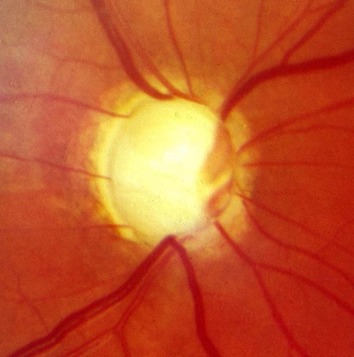
Glaucoma is a serious, long-term eye disease that can gradually damage vision without early warning signs. Many patients are unaware they have glaucoma until significant and irreversible vision loss has already occurred.
At Aram Advanced Healthcare, we provide comprehensive glaucoma screening, diagnosis, and advanced treatment in Puducherry with modern technology and long-term follow-up care.
What is glaucoma?
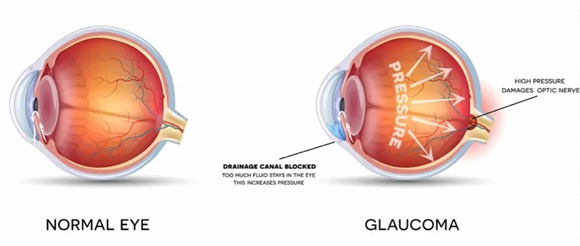
Glaucoma is a condition in which the optic nerve (the nerve connecting the eye to the brain) gets damaged. This damage is most commonly due to increased pressure inside the eye (intraocular pressure).
If untreated, glaucoma can cause permanent and irreversible vision loss.
Why is glaucoma dangerous?
Glaucoma is often called the “Silent Thief of Sight” because:
- It usually has no early symptoms
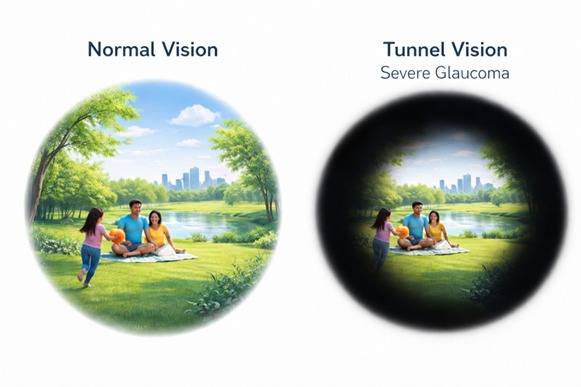
- Vision loss starts from the side (peripheral vision)
- Damage is permanent
- Patients may feel vision is normal until advanced stages
By the time central vision is affected, significant optic nerve damage has already occurred.
Types of Glaucoma
Primary Open-Angle
Most common type, develops slowly, no pain, gradual side vision loss.
Angle-Closure Glaucoma
Sudden pressure rise, severe eye pain, headache, vomiting, halos – medical emergency.
Other Types
Normal-tension, steroid-induced, secondary (trauma/inflammation), congenital.
Who is at risk?
You may be at higher risk if you:
- Are above 40 years of age
- Have a family history of glaucoma
- Have diabetes or high BP
- Long‑term steroid use (any form)
- High minus power (myopia)
- Previous eye injury
If you fall into these categories, regular screening is strongly advised.
Symptoms to watch for
Most patients do not notice early symptoms. However, warning signs may include:
- Gradual loss of side vision
- Difficulty seeing in dim light
- Tunnel vision in advanced stages
- Eye pain and redness (in acute cases)
- Sudden blurred vision with halos
How is glaucoma detected?
A comprehensive glaucoma evaluation includes:
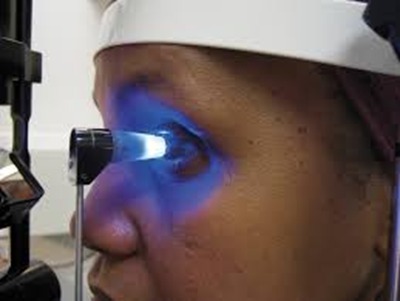
- Eye pressure measurement (Tonometry)
- Optic nerve examination
- Visual field test
- OCT scan of the optic nerve
- Corneal thickness measurement
- Drainage angle assessment
Glaucoma cannot be diagnosed by checking vision alone.
Treatment options
The goal of treatment is to lower eye pressure and protect the optic nerve.
Eye Drops
First line: reduce fluid or improve drainage. Must be used regularly.
Laser Treatment
Quick outpatient procedure to improve drainage, minimal discomfort.
Surgery
If pressure not controlled. Creates new drainage (incl. MIGS).
Treatment is individualized based on the stage and type of glaucoma.
Can glaucoma be cured?
Glaucoma cannot be cured. However, it can be controlled with:
- Early detection
- Regular follow-up
- Proper medication use
- Timely laser or surgical intervention
Vision already lost cannot be restored — which is why early diagnosis is critical.
Importance of Regular Eye Check-ups
We recommend:
- Every 1–2 years after age 40
- Earlier and more frequently if high risk
- Lifelong follow-up for diagnosed patients
Routine screening can detect glaucoma before symptoms begin.
Our Glaucoma Care Services
At our centre, we provide:
- Medical management
- Laser glaucoma procedures
- Glaucoma surgery including MIGS
- Long-term monitoring and counselling
Our focus is not just lowering eye pressure — but preserving your vision and quality of life.
Frequently Asked Questions
Usually no. Most types (especially open-angle) are painless. However, angle-closure glaucoma can cause severe eye pain and is a medical emergency.
No. Glaucoma cannot be cured, and vision already lost cannot be restored. But with early detection and proper treatment, further vision loss can be prevented or slowed.
Not if it is detected early and treated properly. Regular follow-up and strict use of medications help preserve vision for life.
Not always. Many patients are controlled with eye drops alone. Laser or surgery is recommended only if pressure is not controlled with medications.
Glaucoma treatment is usually lifelong. Stopping drops without medical advice can lead to permanent vision damage.
After age 40, an eye check-up every 1–2 years is recommended. If you have glaucoma or are at high risk, follow-up may be needed more frequently as advised by your doctor.