
Cataract Surgery in Puducherry
Clear Vision. Safe Surgery. Faster Recovery.
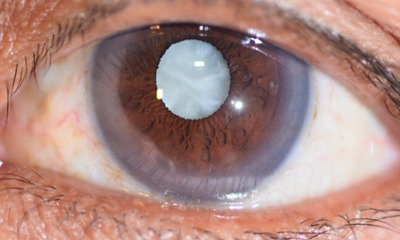
At Aram Advanced Healthcare, we provide advanced cataract surgery in Puducherry using state-of-the-art technology, experienced surgical expertise, and customized intraocular lens (IOL) options for optimal visual outcomes.
Cataract is one of the most common and treatable causes of vision loss. With modern micro-incision techniques and premium lens technology, cataract surgery today is safe, precise, painless, and highly successful.
What is a cataract?
A cataract is the natural clouding of the eye’s clear lens. As the lens becomes cloudy, light cannot pass through properly, leading to blurred or dim vision. Cataracts usually develop gradually and commonly occur with aging, but they may also be seen in younger individuals due to diabetes, trauma, long-term steroid use, or other medical conditions.
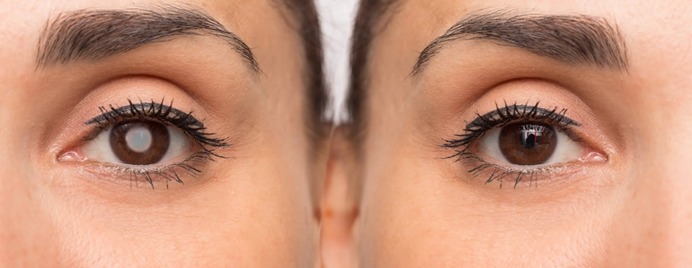
You may need evaluation if you experience
- Blurred or cloudy vision
- Glare or difficulty driving at night
- Halos around lights
- Frequent change in spectacle power
- Faded or dull colours
- Increased sensitivity to bright light
If these symptoms begin affecting your daily activities such as reading, driving, or watching television, surgery may be considered.
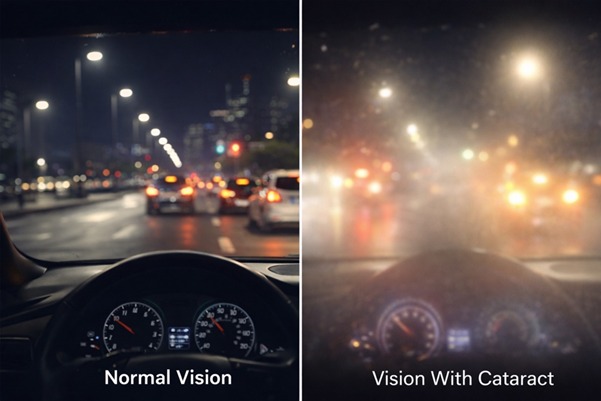
When is cataract surgery needed?
- Vision cannot be improved adequately with glasses
- Cataract interferes with daily life or professional work
- Cataract affects examination or treatment of other eye problems
- The patient desires better quality of vision
Cataract surgery at our hospital
At Aram Advanced Healthcare, Puducherry, we perform NO suture, NO pain, NO injection cataract surgery using state-of-the-art technology in an advanced operation theatre.
- Takes 10–15 minutes
- Is performed under topical (drop) anaesthesia
- Requires no injection in most cases
- Allows discharge the same day
The cloudy lens is removed using advanced micro-incision techniques and replaced with a permanent artificial lens (Intraocular Lens – IOL).
Types of lenses (IOL Options)
Choosing the right lens is an important part of surgical planning. We offer:
| Lens Type | Quality of Vision after surgery | Need for glasses / notes |
|---|---|---|
| Monofocal | Only distance | Needed for computer & reading |
| Advanced Monofocal / Monofocal Plus | Distance + some intermediate | Needed for reading – active seniors |
| EDOF (Extended Depth of Focus) | Distance + intermediate + some near | Only for fine print |
| Trifocal / Multifocal | Distance + intermediate + near | Usually don’t need glasses |
| Toric IOL | Corrects cylinder + vision | Based on lens type – for high cylinder |
We help you choose the most suitable option after detailed eye measurements.

Pre‑Surgery Evaluation
Before surgery, we perform: detailed eye examination, vision assessment, retina evaluation, advanced lens power calculation (biometry), and corneal assessment. This ensures accurate lens selection and optimal visual outcome.
After Surgery
- Vision usually improves within a few days
- Mild watering or light sensitivity is normal initially
- Eye drops are prescribed for 3–4 weeks
- Routine activities can be resumed quickly
- Follow-up visits are important
Most patients experience significant improvement in clarity and brightness of vision.
Frequently Asked Questions
No. It is usually done under eye drops and is painless.
No. It is a day‑care procedure.
Surgery is done one eye at a time with a short gap (usually 2‑3 days).
The implanted lens is permanent and usually lasts a lifetime.
Surgery is advised when blurred vision starts affecting daily activities like reading, driving, watching TV, or recognizing faces. It is not based on the “stage” alone but on how much your vision is disturbed.
Cataract surgery usually takes about 10–20 minutes. However, you may spend 2–3 hours at the hospital for preparation and recovery.
Most patients resume routine daily activities within 1–2 days.
• Mobile/TV: from next day (avoid prolonged screen time).
• Body bath: from next day; head bath after 5‑7 days (avoid water in eye).
• Walking, light household work: from next day.
• Cooking allowed but avoid heat/smoke.
• Heavy lifting/gym/swimming: avoid 3‑4 weeks.
• Do not rub the eye.
Depends on lens type: monofocal may require glasses for reading; premium lenses (multifocal/toric) may reduce dependence. Your doctor will help choose the best option.
Yes. Cataract surgery is one of the safest and most commonly performed surgeries worldwide. Complications are rare when performed by experienced surgeons.
Use prescribed eye drops regularly, avoid rubbing the eye, protect from dust/water, attend follow‑up visits.
No. Once removed, a cataract does not come back. However, very few patients may develop a mild membrane clouding behind the lens (posterior capsule opacification), which can be easily treated with a simple laser procedure.
No special diet required. You can continue regular food unless advised otherwise for other medical conditions.